
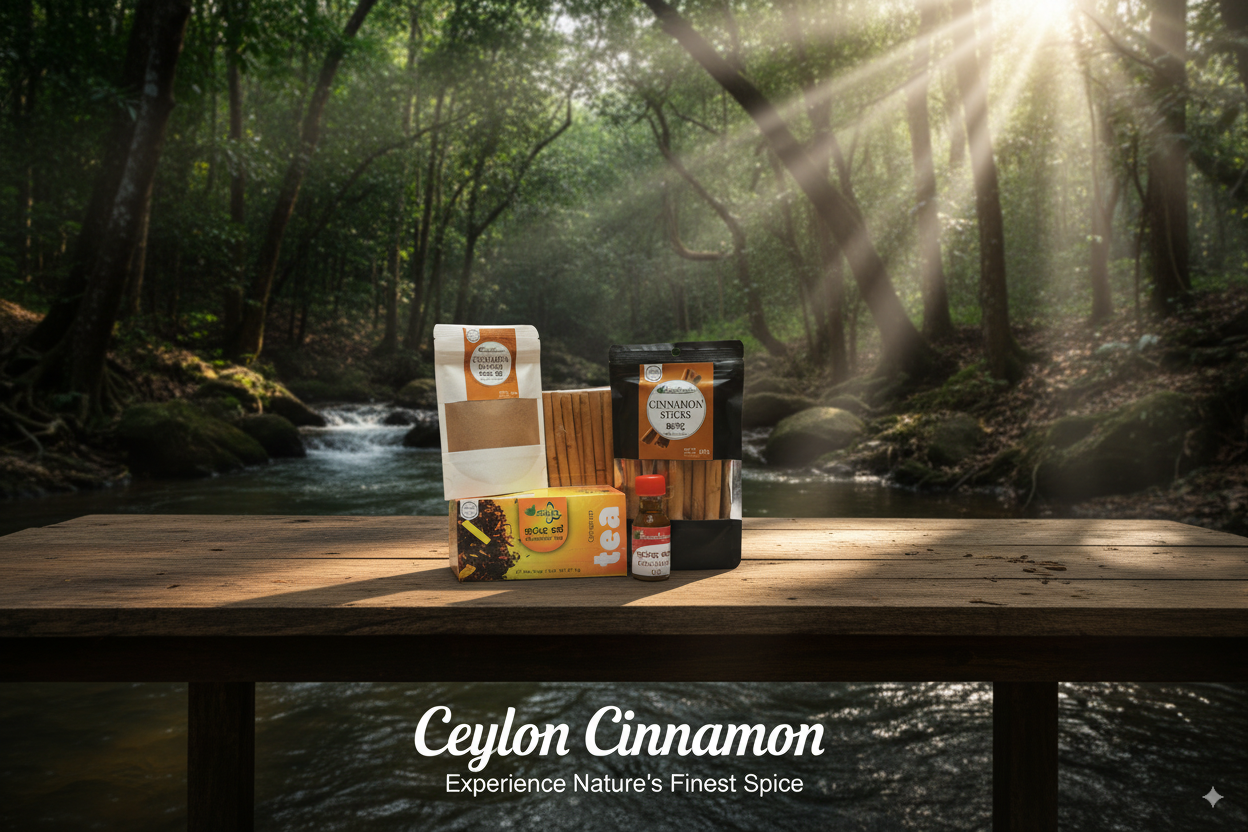
Cinnamon is more than just a spice in Sri Lanka — it is a story of culture, trade, and heritage that has shaped the island’s identity for centuries. Let’s look at how cinnamon cultivation began, how it spread across the country, and why Sri Lankan cinnamon is celebrated worldwide.
🌱 Beginnings of Cinnamon Cultivation in Sri Lanka
The history of cinnamon in Sri Lanka dates back over 2,000 years. Ancient chronicles such as the Mahavamsa mention the use of cinnamon in religious rituals and medicine. The island’s warm climate and fertile soil provided the perfect environment for cultivating this fragrant bark.Early villagers carefully harvested cinnamon from wild trees, peeling the delicate inner bark and drying it in the sun. Over time, cinnamon became a treasured resource, sought after by traders from Arabia, Persia, and later, Europe.
📜 Cinnamon Across Different Periods
1. Ancient and Early Kingdoms (Before 1505)
- Cinnamon was offered in temples and used in Ayurvedic healing.
- Arab traders carried Sri Lankan cinnamon to the Middle East and beyond.
- It became an important export commodity long before European arrival.
2. Portuguese Period (1505 – 1658)
- The Portuguese controlled the coastal areas and took over the cinnamon trade.
- Cinnamon harvesting became more organized, with special guilds of peelers.
- It was one of the main sources of colonial revenue.
3. Dutch Period (1658 – 1796)
- The Dutch established cinnamon plantations and monopolized exports.
- They introduced systematic cultivation methods, making Sri Lankan cinnamon famous across Europe.
- Cinnamon became known as “Ceylon Cinnamon,” a prized product in global trade.
4. British Period (1796 – 1948)
- The British expanded cinnamon cultivation but later encouraged tea and coffee as well.
- Cinnamon continued as a valuable spice, though less dominant than tea.
5. Modern Sri Lanka (1948 – Present)
- Today, cinnamon is grown mainly in the Southern and Western provinces.
- Small farmers and estates continue the tradition, using skills passed down for generations.
- Sri Lanka produces over 80% of the world’s true cinnamon (Cinnamomum verum).